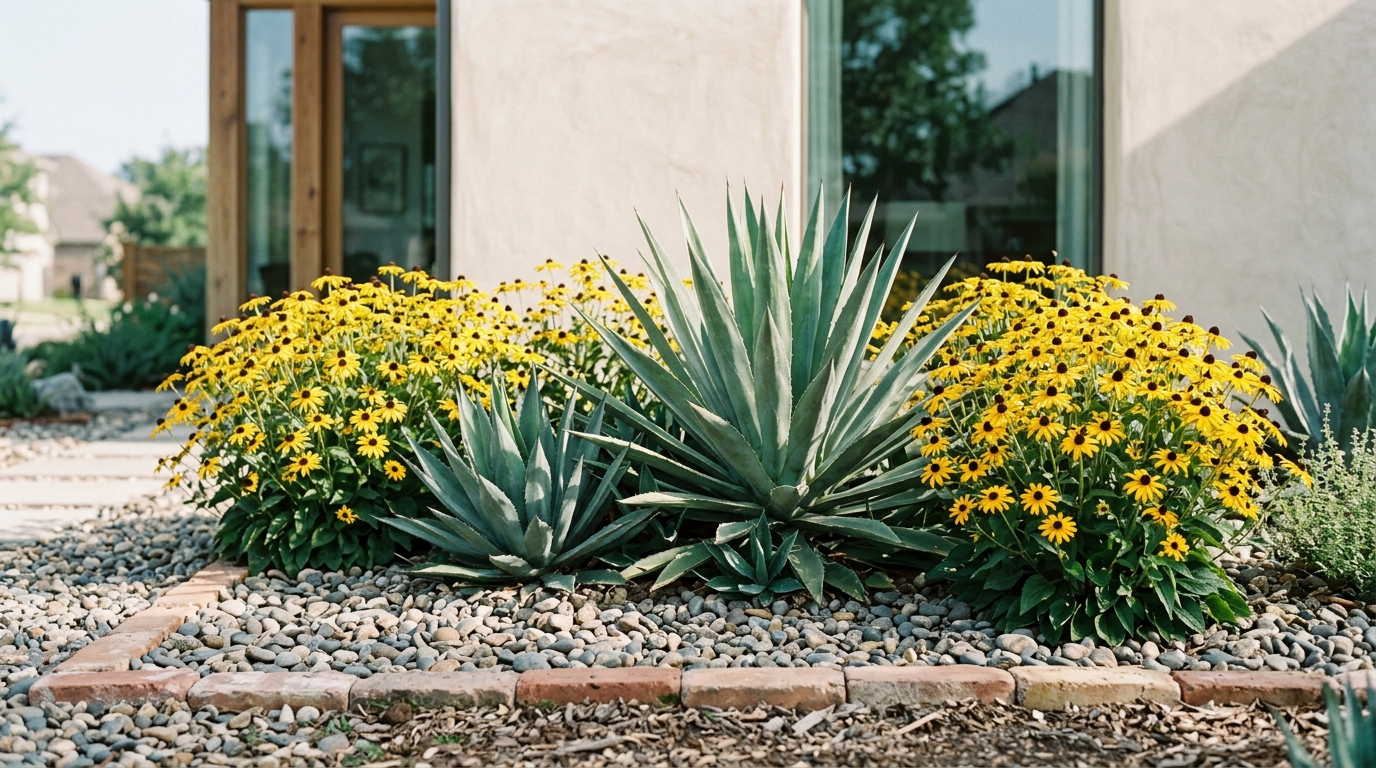
Drought-resistant plants can be just as stunning as thirsty ornamentals - lavender, agave, Russian sage, black-eyed Susan, and California poppy deliver bold color and texture while surviving on minimal water. Here are the best-looking drought-tolerant plants for real gardens.
Water-wise gardening has moved well past the era of gravel lawns and scraggly cacti. Today's drought-tolerant palette includes silky grasses, jewel-toned perennials, and structural succulents that look like they belong in a design magazine. Whether you're in a water-restricted region or simply want a lower-maintenance yard, these plants earn their place on looks alone.
Why Drought Tolerance Matters More Than Ever
Prolonged drought conditions across the American West, Mediterranean Europe, and parts of Australia have pushed gardeners to rethink their plant choices. Beyond conservation, drought-tolerant plants typically need less fertilizer, suffer fewer fungal diseases (dry foliage stays healthier), and require minimal intervention once established. The trade-off used to be aesthetics. That trade-off no longer exists.
The Best Beautiful Drought-Resistant Plants
1. Lavender (Lavandula angustifolia)
Lavender is the gold standard of drought-tolerant beauty. Its purple flower spikes bloom from late spring through summer, it smells extraordinary, and it attracts pollinators by the dozens. Plant it in full sun with well-drained soil and it will thrive on rainfall alone in most temperate climates after its first season. 'Hidcote' and 'Munstead' are the two most reliable cultivars for compact, tidy growth.
2. Russian Sage (Salvia yangii)
Russian sage produces tall, airy spikes of violet-blue flowers from midsummer into fall, creating a haze of color that looks spectacular massed along a border. It tolerates poor soil, intense heat, and extended dry spells without complaint. Cut it back hard in early spring and it rebounds with vigor. Few plants deliver this much visual impact with this little water.
3. Agave (Agave americana and relatives)
Agaves are architectural masterpieces. Their bold, symmetrical rosettes - ranging from blue-gray to variegated green and gold - add strong structure to any planting. They're nearly indestructible in dry climates and look dramatic year-round, not just during a bloom season. Smaller species like Agave parryi fit neatly into mixed borders without overwhelming surrounding plants.
4. Black-Eyed Susan (Rudbeckia fulgida)
Black-eyed Susans bring cheerful, golden-yellow daisy flowers with dark centers from midsummer through fall. They're native to North America, which means local wildlife - especially goldfinches - depend on them. They tolerate drought, clay soil, and neglect, yet still produce an abundance of flowers. 'Goldsturm' is the most widely planted cultivar and blooms reliably for weeks.
5. California Poppy (Eschscholzia californica)
California poppies self-sow freely, returning year after year with almost no effort. Their silky, cupped flowers come in orange, yellow, cream, and pink, and they thrive in poor, dry soil where other plants struggle. Direct-sow seeds in fall or early spring and step back - they handle the rest. Few annual-style plants are more rewarding for less work.
6. Sedum / Stonecrop (Sedum spectabile and relatives)
Sedums offer season-long interest: fleshy, sculptural foliage in spring and summer followed by clusters of star-shaped flowers in pink, red, or white in late summer. They thrive in containers and garden beds, tolerate reflected heat from pavement, and look attractive even when dried and left standing through winter. 'Autumn Joy' remains one of the best-performing varieties available.
7. Blue Oat Grass (Helictotrichon sempervirens)
Ornamental grasses add movement and texture that flowering plants can't replicate. Blue oat grass forms tight, spiky mounds of steel-blue foliage that look sharp against warm-toned stone or rusty ornamental structures. It's evergreen in mild climates, drought-tolerant once established, and virtually pest-free. Plant it where afternoon sun can backlight the blades for the best effect.
8. Penstemon (Penstemon spp.)
Penstemons are among the most hummingbird-attractive plants you can grow in a dry garden. Their tubular flowers in red, pink, purple, and white bloom spring through summer on upright stems. Native species like Penstemon barbatus and Penstemon digitalis 'Husker Red' are especially tough, combining dramatic foliage color with outstanding floral display and genuine drought hardiness.
Drought-Resistant Plants: A Quick Comparison
- Lavender- Bloom season: Late spring–summer | Color: Purple | Best feature: Fragrance + pollinator magnet
- Russian Sage- Bloom season: Midsummer–fall | Color: Violet-blue | Best feature: Airy texture, long bloom
- Agave- Bloom season: Structural (rare bloom) | Color: Blue-gray, variegated | Best feature: Year-round architecture
- Black-Eyed Susan- Bloom season: Midsummer–fall | Color: Gold + black | Best feature: Wildlife value, reliability
- California Poppy- Bloom season: Spring–early summer | Color: Orange, yellow, pink | Best feature: Self-seeding, effortless
- Sedum- Bloom season: Late summer–fall | Color: Pink, red, white | Best feature: Four-season interest
- Blue Oat Grass- Bloom season: N/A (foliage) | Color: Steel blue | Best feature: Texture, evergreen habit
- Penstemon- Bloom season: Spring–summer | Color: Red, pink, purple | Best feature: Hummingbird attraction
How to Establish Drought-Resistant Plants Successfully
Even the toughest drought-tolerant plant needs consistent watering during its first growing season to develop a deep, resilient root system. Follow these steps for the best results:
- Plant in fall or early spring- cooler temperatures reduce transplant stress and let roots establish before summer heat arrives.
- Amend sparingly- most drought-tolerant plants prefer lean soil. Adding too much compost or fertilizer encourages soft, water-hungry growth.
- Mulch generously- a 3-inch layer of coarse mulch suppresses weeds, moderates soil temperature, and retains moisture while plants establish.
- Water deeply but infrequently- deep, infrequent watering trains roots to go deep rather than staying shallow and dependent.
- Cut back irrigation gradually- after the first full season, reduce supplemental water and let plants adjust to natural rainfall patterns.
Design Tips for a Beautiful Drought-Tolerant Garden
Drought-tolerant plantings look best when you mix textures and plant forms deliberately. Combine the fine-textured haze of Russian sage with the bold rosettes of agave, then thread in the upright spikes of penstemon for vertical interest. Use California poppies or black-eyed Susans to fill gaps with seasonal color. Ground-covering sedums smooth transitions between taller plants and pathways.
Color repetition matters too. Carry a single hue - say, the blue-purple of lavender and Russian sage - through multiple areas of the garden to create visual cohesion. Then punctuate with a contrasting warm tone, like the gold of black-eyed Susans, to make both colors pop.
Avoid the temptation to space plants tightly for immediate impact. Drought-tolerant plants spread and fill in; give them room to mature and the result looks intentional rather than crowded.
Drought-resistant Plants FAQ
Do drought-resistant plants need any watering at all?
Yes, during their first growing season. Newly planted drought-tolerant plants need regular deep watering - roughly once or twice a week - to establish a strong root system. Once established, most tolerate natural rainfall in temperate climates and need supplemental water only during extended heat waves or severe drought.
Which drought-tolerant plants grow fastest?
California poppy and Russian sage are among the fastest. California poppies bloom within 60–90 days of direct seeding. Russian sage reaches its full spread of 3–4 feet wide within two growing seasons from a small transplant.
Can I grow drought-resistant plants in containers?
Yes. Lavender, sedum, agave, and blue oat grass all perform well in containers. Use a gritty, fast-draining potting mix (combine standard potting soil with at least 30% perlite or coarse sand), and make sure every container has drainage holes. Containers dry out faster than garden beds, so even drought-tolerant plants need more frequent watering when potted.
Are drought-resistant plants safe for pets and children?
It varies by species. Lavender, black-eyed Susan, and California poppy are generally considered low-toxicity. Agave sap and leaf spines can cause skin irritation and are a physical hazard, especially for small children. Always cross-reference specific plants with the ASPCA's toxic plant database if pets are a concern.
What's the difference between drought-tolerant and drought-resistant plants?
The terms are used interchangeably in most gardening contexts, but technically drought-resistant plants evolved to survive with very little water indefinitely (like agave and native cacti), while drought-tolerant plants can withstand dry periods but perform better with occasional supplemental water (like lavender and black-eyed Susan). For garden planning purposes, the practical distinction is small - both groups require far less water than conventional ornamentals.