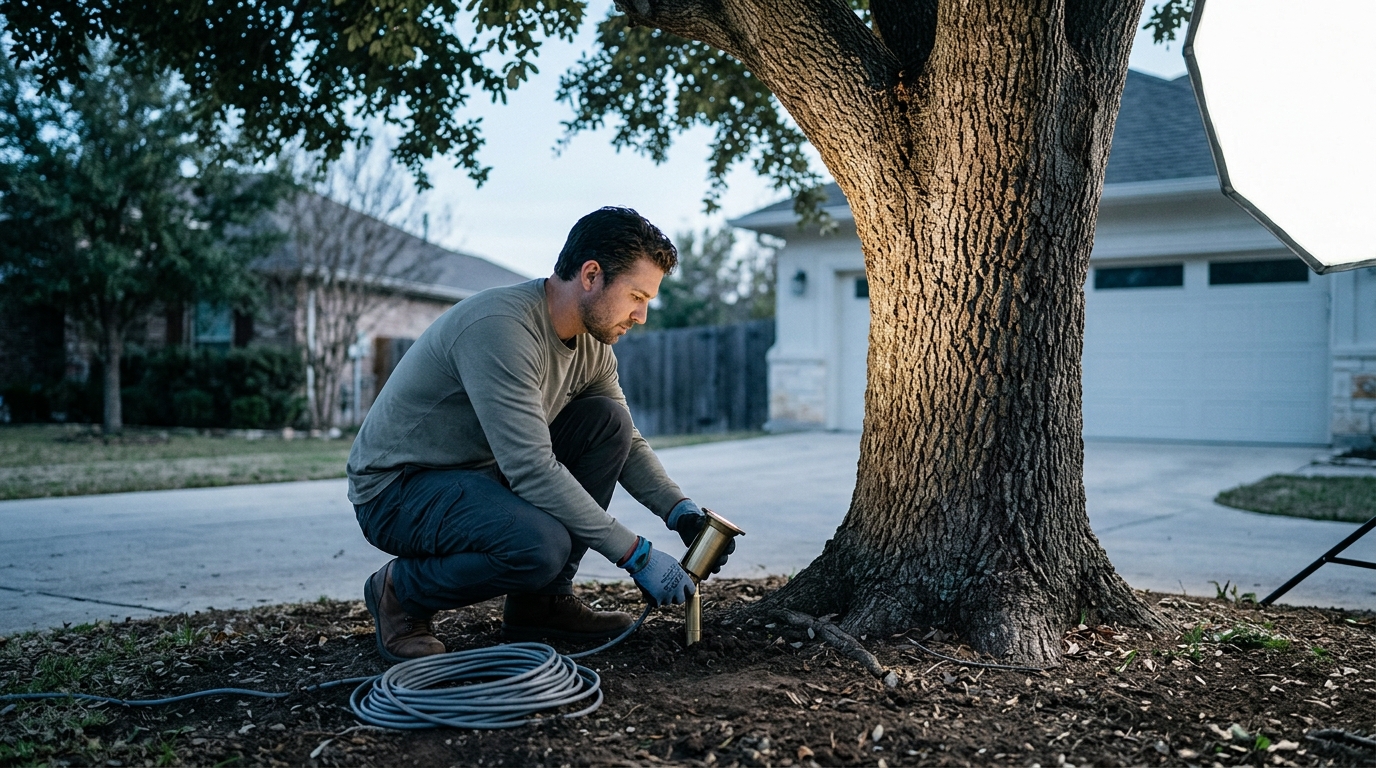
The right outdoor lighting increases a home's perceived value by up to 20% and is one of the fastest curb appeal upgrades you can make in a single weekend. This guide walks you through fixture types, placement strategy, color temperature, and common mistakes - so every dollar you spend does visible work after dark.
Why Outdoor Lighting Is a Curb Appeal Priority
Most buyers, guests, and neighbors see your home at night as often as they see it in daylight. A well-lit exterior communicates maintenance, security, and intention. Poorly lit homes look neglected regardless of how well-landscaped or freshly painted they are. Outdoor lighting is the single upgrade that works 365 nights a year without any additional effort from you.
Beyond aesthetics, strategic lighting improves safety on walkways and driveways, deters opportunistic trespassing, and extends the usable hours of outdoor spaces like porches and patios. It's one of the rare home improvements that combines function, security, and beauty in a single investment.
The 5 Zones of Exterior Lighting
Before buying a single fixture, map your property into zones. Every zone has a different lighting goal, and mixing them up is the most common mistake homeowners make.
- Entry and front door: Highest priority. This is your home's focal point. Light here should be bright enough to read by but warm enough to feel welcoming - not interrogation-grade.
- Walkways and paths: Low-to-the-ground, directional light that guides foot traffic without blinding people at eye level.
- Driveway and garage: Functional, motion-activated or dusk-to-dawn fixtures that light a large flat area efficiently.
- Landscape and architectural features: Uplights, downlights, and spotlights that accent trees, columns, stonework, and planting beds.
- Perimeter and fence line: Low-level ambient light that defines property edges and adds depth without overpowering other zones.
Choosing the Right Fixture Type
Fixture selection is where most homeowners get overwhelmed. The market is enormous, but you only need to match fixture type to zone function.
- Wall sconces: Best for entry zones and garage flanking. Choose sconces that complement your home's architectural style - clean lines for modern homes, lantern shapes for craftsman or colonial styles.
- Post lights: Ideal for driveways and property entries. They provide wide-area illumination and anchor long sightlines from the street.
- Path lights: Short, stake-mounted fixtures for walkways and garden borders. Spacing them 6 to 8 feet apart creates rhythm without overcrowding.
- Uplights and spotlights: Directional fixtures placed at ground level to cast light upward onto architectural details, large trees, or front façade features.
- Flood lights and motion sensors: High-output fixtures for driveways and side yards where security is the primary need. Pair them with motion sensors to avoid light pollution.
- String lights: Decorative only. Use on porches and patios to add warmth, but never rely on them as primary exterior illumination.
Color Temperature: The Most Overlooked Decision
Color temperature - measured in Kelvins (K) - determines whether your lighting feels warm and inviting or cold and clinical. This single spec affects the entire mood of your exterior.
- 2700K–3000K (warm white): The gold standard for residential curb appeal. Mimics incandescent light. Makes wood, brick, and warm-toned siding look rich and inviting.
- 3500K–4000K (neutral white): Acceptable for garages and utility areas. Too cool for entry and landscape lighting - it strips warmth from natural materials.
- 5000K+ (daylight/cool white): Appropriate for security flood lights where visibility is the only goal. Looks institutional on a front porch and drains warmth from any color palette.
The rule is simple: stay at 2700K–3000K for every zone that guests see first. Reserve cooler temperatures for purely functional, out-of-sightline areas.
LED vs. Other Technologies in 2026
LED fixtures are the only technology worth buying for new installations. They consume 75–80% less energy than legacy incandescent options, last 25,000 to 50,000 hours on average, and are available in every color temperature and fixture style. Solar-powered LED path lights have improved dramatically - quality units now maintain reliable output even in climates with fewer than five peak sun hours per day.
Avoid fluorescent exterior fixtures entirely. They perform poorly in cold temperatures and render color inaccurately. Halogen is still available but offers no advantage over LED and significantly higher operating costs over time.
Brightness and Lumens: A Simple Guide
Wattage no longer tells you how bright a fixture is - lumens do. Here are practical targets for each zone:
- Path lights: 50–150 lumens per fixture
- Entry wall sconces: 400–800 lumens per fixture
- Garage and driveway fixtures: 700–1,300 lumens per fixture
- Landscape spotlights (trees, architectural features): 200–400 lumens per fixture
- Security flood lights: 1,500–2,500 lumens per fixture
Bigger is not always better. Overlighting creates glare, erases shadow depth, and makes a home look like a parking lot rather than a residence. Aim for layered light with intentional contrast between bright focal points and softer ambient zones.
Fixture Finish and Style Cohesion
Every visible exterior fixture should share the same metal finish. Mixing matte black, brushed nickel, and bronze across a single façade creates visual noise that undermines the cohesion you're trying to achieve.
Pick one finish and apply it to every fixture on the front of your home - sconces, house numbers, mailbox post light, and door hardware. Matte black is the most versatile finish in 2026, complementing modern farmhouse, contemporary, and traditional styles equally. Aged bronze works well on craftsman, colonial, and Mediterranean homes. Brushed nickel reads as transitional and suits mid-century or coastal styles.
5 Common Outdoor Lighting Mistakes to Avoid
- Uplighting every tree indiscriminately: One or two strategically uplighted trees create drama. Uplighting every shrub on the property creates chaos.
- Installing fixtures too high on a two-story façade: A sconce mounted above the second-floor window line has no relationship to human scale and fails as a welcoming light source.
- Using inconsistent color temperatures across zones: Warm sconces paired with cool-white flood lights look like two different properties stitched together.
- Overcrowding path lights: Spacing path lights 3 feet apart looks like a runway. Six to eight feet gives rhythm and lets each fixture breathe.
- Skipping lighting on the side and rear approach: If guests approach from a driveway or side gate, an unlit path reads as unwelcoming or unsafe even if the front is beautifully lit.
Smart Lighting Controls That Add Value
Automating your outdoor lighting adds both convenience and energy savings. Dusk-to-dawn photocells are the minimum standard - they eliminate the need to remember to turn lights on and off. Motion sensors on security and garage fixtures reduce energy use by 30–50% compared to always-on operation. Smart lighting systems like those compatible with Matter protocol (the industry standard as of 2026) allow zone-by-zone scheduling, dimming, and color temperature adjustment from a single app.
If you're investing in landscape lighting, a dedicated low-voltage transformer with programmable timers is the correct infrastructure. It lets you add or reposition fixtures without rewiring and keeps the entire system on one controllable circuit.
How to Build a Cohesive Outdoor Lighting Plan
Start by photographing your home's exterior at night before any changes. Note where shadows are too heavy, where glare is a problem, and where the eye naturally travels. Then sketch the five zones on a site plan - or just a rough drawing of your property - and assign fixture types, lumen targets, and color temperatures to each zone. Purchase fixtures in the same finish family before you install anything so you can compare them side by side in natural daylight.
Install entry sconces first because they have the highest visual impact per dollar spent. Then add path lighting, then landscape accents, then perimeter and security fixtures. This sequencing lets you stop at any budget point and still have a coherent, improved result.
---
What color temperature is best for front porch lighting?
2700K to 3000K is the ideal range for front porch and entry lighting. This warm white range makes architectural details, wood, and masonry look rich and inviting without the clinical edge of cooler temperatures. Stay below 3000K for any fixture that guests encounter first.
How far apart should outdoor path lights be spaced?
Space path lights 6 to 8 feet apart for a balanced, rhythmic look. Closer spacing - under 4 feet - creates an overcrowded runway effect and increases cost without improving illumination. Each fixture should cast a soft pool of light that just overlaps with the next one.
Are solar path lights reliable enough for a permanent installation?
Quality solar LED path lights are reliable for most climates in 2026. Look for fixtures with at least 2,000mAh battery capacity and an IP65 weather rating. In climates with extended cloud cover or less than four peak sun hours daily, hardwired low-voltage systems are more consistent performers.
Should all exterior light fixtures match in finish?
Every fixture visible from the street should share the same metal finish. Mixing finishes - such as pairing matte black sconces with brushed nickel house numbers and bronze path lights - creates visual inconsistency that undermines the polished look you're trying to achieve. Choose one finish and apply it uniformly across sconces, post lights, and visible hardware.
How many lumens does a front door sconce need?
A front door wall sconce should output 400 to 800 lumens per fixture. If you have two sconces flanking a door, each can sit at the lower end of that range - around 400 to 500 lumens - because the combined output will be sufficient. A single sconce should target the upper end, 700 to 800 lumens, to adequately illuminate the entry without relying on other nearby fixtures.